Chagdud Tulku Rinpoche was often called “the pure motivation lama.” Everywhere he went, he would teach from the perspective of motivation. By that he meant what drives us… and how we can learn to turn the egocentric impulses and emotions that can propel much of our decision-making into something based in good heart, in care for others. Once, when Rinpoche was teaching in Los Angeles, a student complained that—no matter what the topic was—Rinpoche always taught about pure motivation. And Rinpoche proceeded to do so again for that entire session, saying that pure motivation was the only thing he wanted to teach. Why?
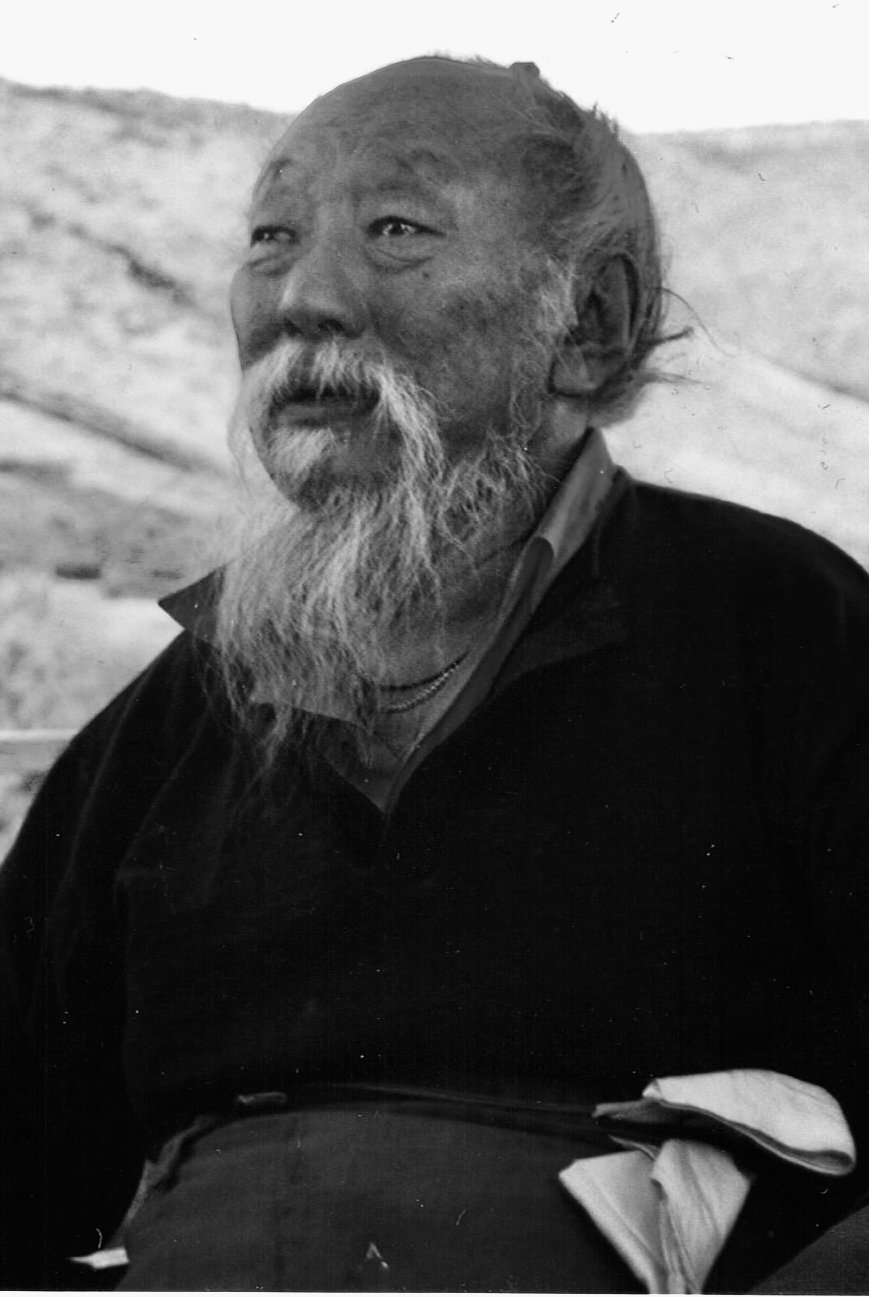
Chagdud Tulku Rinpoche at Iron Knot Ranch
Wherever you find yourself aisled these days—socially, politically, economically—whatever identity you hold as defining who you are in the world is probably driven by some underlying attachment to an idea, a sense of self, a view of what is “right,” and/or an equally pervasive aversion to what is “wrong.” That may be another type of person, or a way of being in the world. And each of us has a slightly different take on what reality is or should be. Thus is the world we live in today.
When we truly begin to digest this truth—how much of our lived experience is defined by the motivations that drive us—we begin to understand how radical pure motivation is.
But you don’t have to take our word for it. The Mahayana Buddhist path offers a variety of contemplative meditations we can employ to check this truth against our own lived experience.
A line we often use in the Bodhisattva Peace Training is: “For the power of peace to touch every person, community, and nation on this earth, it must radiate out from a profound peace within our own minds.” We say it so much, it might have lost its impact, which is a good example of how resonating with an idea intellectually is so different from knowing it experientially.
For almost thirty years, the Bodhisattva Peace Institute has trained those who want to develop a greater capacity to understand and utilize these ideas experientially. Over the coming month, we invite you to join us in reflecting on the role motivation plays in the decisions we make, and then to begin to work with establishing pure motivation.
-
In this contemplation, take some time to review your life and see if you find a connection between what was in your mind and heart at various times and the outcomes of choices you made.
To begin, think back through your life—the months, years, decades—and recall how often you ignored the needs of others when you were gripped by negative, self-centered emotions. Looking back, consider how these emotions clouded a genuine concern for others.
Consider times when you had attachment to what you wanted and what you thought would bring you happiness—which might range from the slightest fanciful inclination to a full-blown obsession—and then acted on that attachment.
Consider times when you had aversion to what you didn’t want or what you thought would bring you suffering—which might range from the slightest irritation to full-blown rage—and then acted on your aversion.
What were the immediate consequences of your actions? If you look back over the years, what happened to those relationships? Are you still in the same job or community? Do you have a good relationship with those people?
Next, think back on the times when your heart was open and filled with concern for others: when your motivation was truly pure, when you had no agenda other than to love someone and let them know they were loved, when you put their needs before your own.
What were the outer and inner consequences of these actions in the short term? In the long term?
Which choices gave you confidence, nourished you, and supported you in continuing to try to benefit others? Which choices caused you to feel resentful or disappointed or to shut down? What was your motivation at the time? Did you have some kind of attachment, ulterior or mixed motivation? Did your negative emotions take over?
When you think about situations in which your motivation wasn’t so positive, consider what might have happened in those circumstances if you’d focused instead on pure motivation.
What would have happened if you’d asked yourself how you could be of greater benefit to everyone equally?
How could you have balanced not just the short term but the long term benefit of everyone involved?
If you’d brought that kind of thought process to your planning or activity, how might the outcome have been different?
-
At the beginning of each day, each meditation session, and ideally before everything we do, we establish pure motivation. We begin by thinking of the person or people we would most like to benefit, and we consider their lives—the difficulties and challenges they face.
Then we imagine all those who find themselves in similar circumstances. We continue to expand our compassion until it encompasses all beings, each of whom suffer at various times to a greater or lesser degree, and all of whom seek only to find stable contentment and fulfillment. We formulate the aspiration and intention to bring them all to a state of unceasing happiness, establishing this as the purpose of whatever we’re doing.
If we have a relationship to prayer, we then pray—to whosoever or whatsoever embodies our highest ideals of limitless wisdom, compassion, and ability to benefit—that by those blessing and through our own efforts, temporary and ultimate benefit may be accomplished for all beings.